
Home / Resources / Solutions library
Laboratories and wet process areas
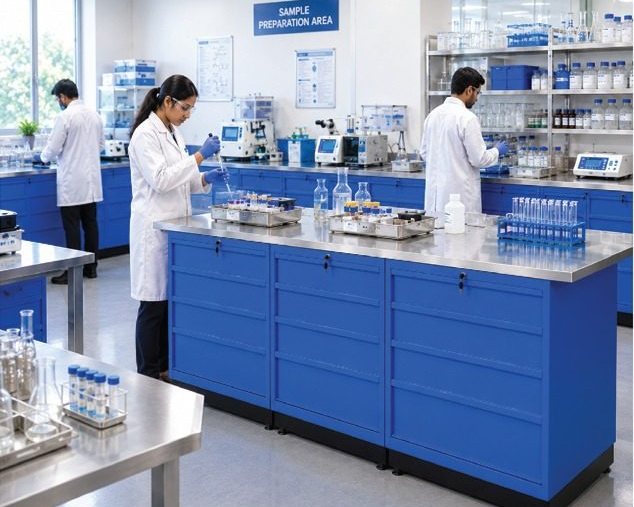
Set up a lab bench that handles chemicals and daily disinfection
Worktops, sinks and storage chosen for wet, chemical work.
The problem
Office-grade tables stain, swell and corrode under reagents and repeated cleaning. Drainage is improvised and accreditation audits keep raising the same findings.
Why it happens
The furniture was not specified for chemical exposure, wet work or daily disinfection.
How the setup comes together
- Choose the worktop by hazard: HPL for general lab work, SS for heavy washdown.
- Place sink cabinets beside the wet-work benches.
- Store reagents below the worktop and keep the work surface clear.
- Run power along the rail, away from water.
What changes
Surfaces hold up to chemicals and cleaning, wet and dry work stay separate and the lab is ready for inspection.
Related solutions.
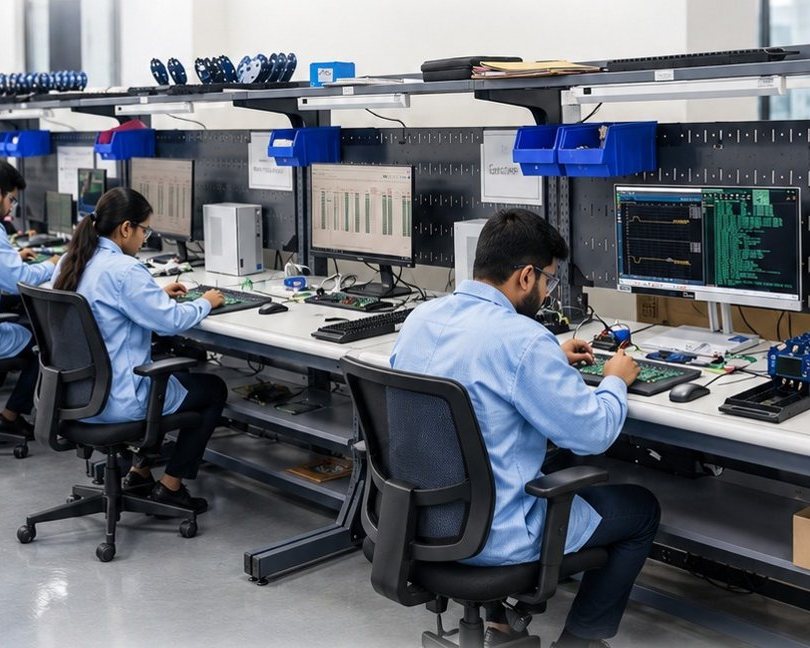
Electronics assembly
Protect electronic assemblies from static damage at the bench
An ESD-controlled bench with grounding built in, not added later.
Manufacturing, Aerospace & aviation, Healthcare, Education & training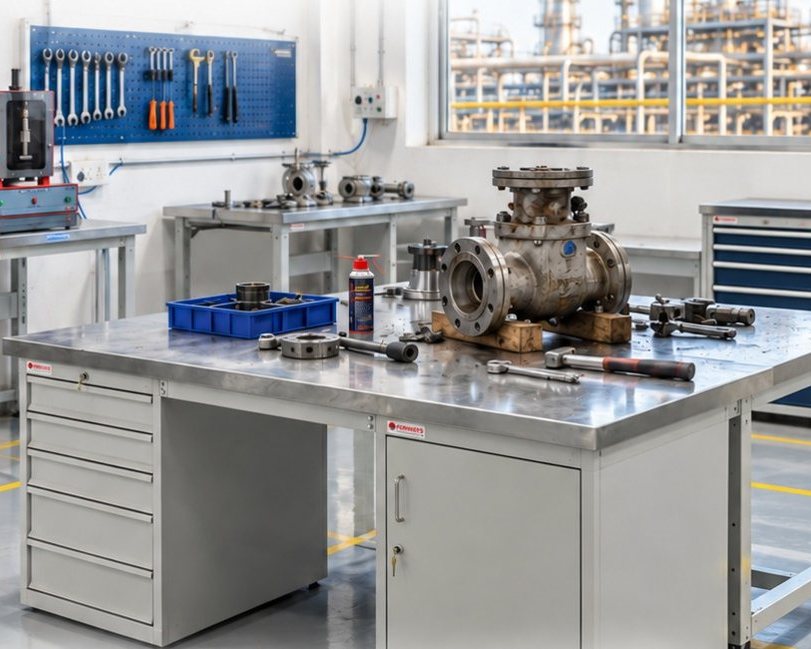
Repair and rework
Keep rework and rejected parts away from good production
A dedicated rework bench with clear segregation for each status.
Manufacturing, Automotive, Oil & gas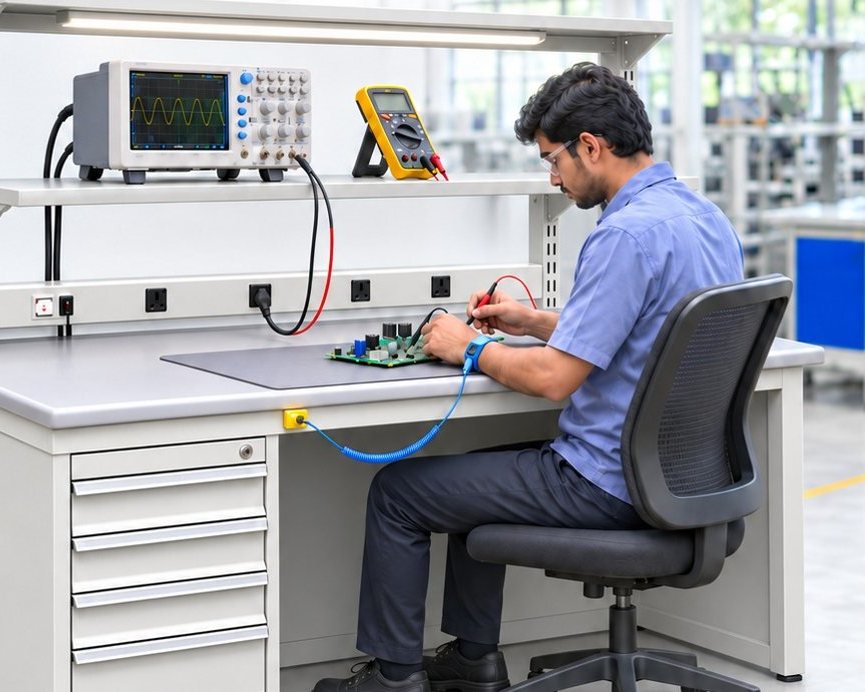
Testing, inspection and calibration
Keep gauges and instruments controlled at the inspection station
A stable bench with separate storage for calibrated and pending instruments.
Manufacturing, Oil & gas, Aerospace & aviation, Gems & jewelleryWant this setup in your space?
Share your layout, the work done there and how many people use it. We'll size this solution from standard modules.