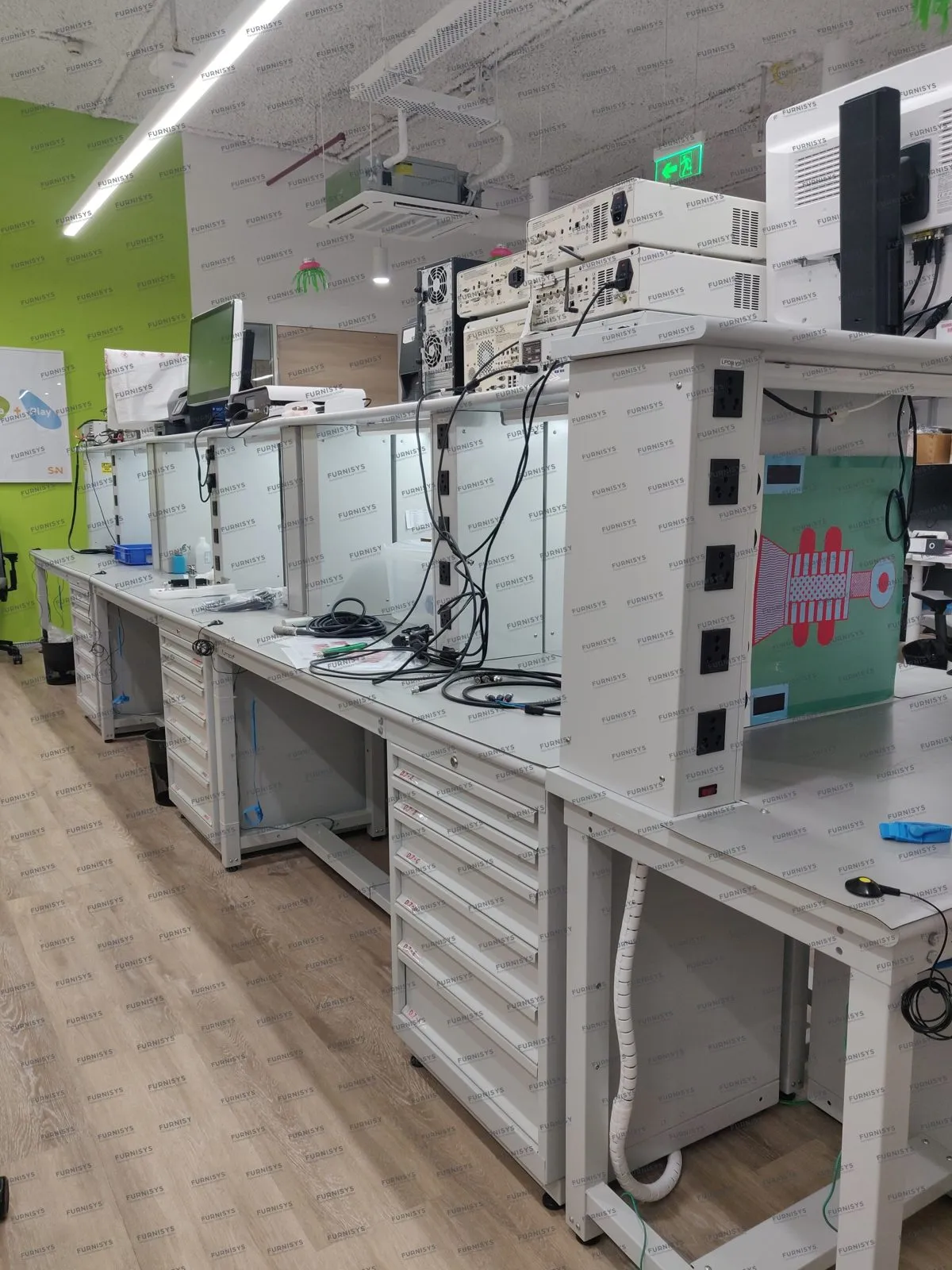
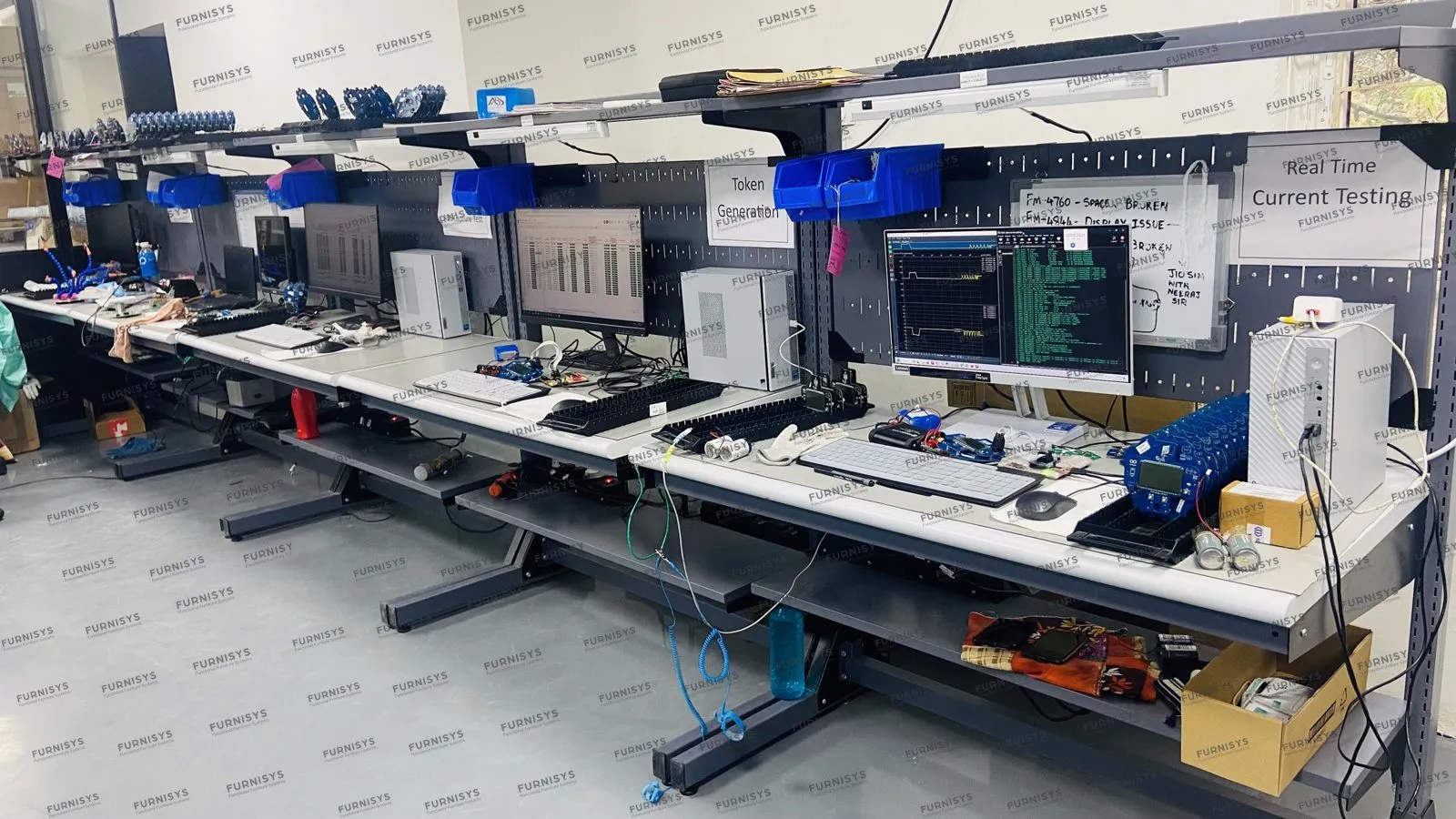
A workbench is the frame and worktop where the work is done. A workstation is a workbench built out for one task, with tools, parts, light and power placed in the order the work happens. The difference decides what you specify, what you pay, and how much time operators spend searching and walking.
The difference at a glance
| Workbench | Workstation | |
|---|---|---|
| What it is | A frame and a worktop | A bench plus everything the task needs |
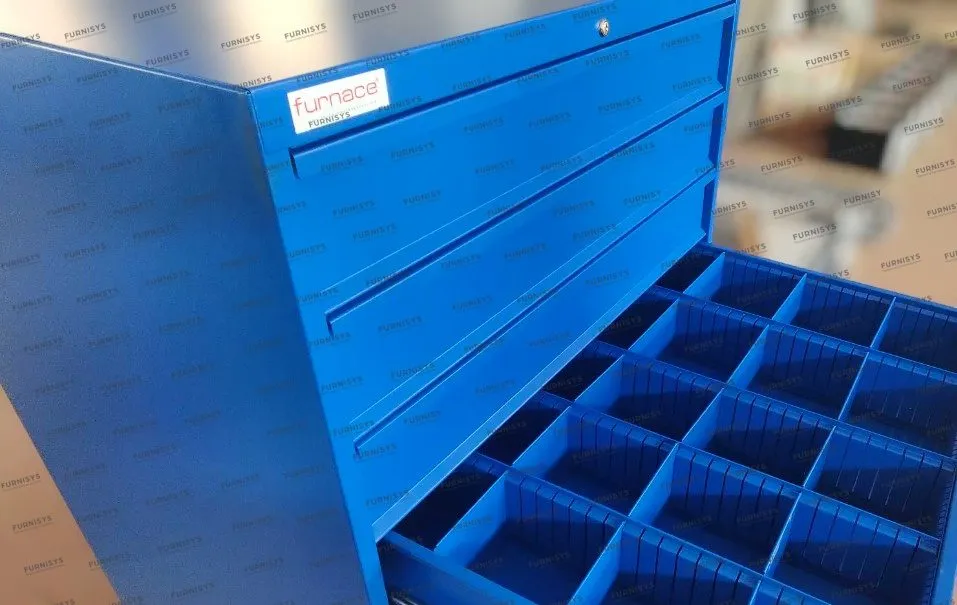
| Typical parts | Frame, worktop, sometimes a drawer | Bench, uprighter, shelves, bins, lights, power, cabinets, flow racks |
| Built around | A size and a load | A task and the order of work |
| Good for | Varied, general work | Repeated work: assembly, testing, packing, kitting |
| When the task changes | Usually unchanged | Accessories are moved or swapped |
When a workbench is enough
A plain workbench is the right buy when the work changes every day and needs a strong, open surface:
- maintenance and repair, where different jobs come to the bench
- tool rooms and fabrication, where load and impact matter most
- general-purpose benches in stores or training rooms
Even then, specify the load rating and the worktop by the hazard. How to specify an industrial workbench lists the decisions.
When you need a workstation
Choose a workstation when operators repeat the same task many times a shift. Placing every tool and part in the order of work cuts reaching, searching and walking. That is where the time on a line goes.
Signs your line needs workstations:
- operators leave the bench to fetch parts or tools
- parts for different jobs get mixed on the worktop
- each station on the line is set up differently
- rework and good parts end up in the same place
Find tools at the assembly station shows a standard setup for the first of these.
Workstation systems: building a line from modules
A workstation system is a family of benches and accessories built to the same standard, so any part fits any station. A line can then grow without being rebuilt.
For example, the Furnisys Flexi system starts with a starter unit. Adder units extend it into a line, and corner units turn it into an L or a U. Uprighters, shelves, bins and lights mount on the same frame. System benefits shows the same idea across the range.
Frequently asked questions
Is a workstation the same as a workbench?
No. A workbench is the frame and worktop. A workstation is a workbench equipped for one task, with tools, parts, lighting, power and storage placed in the order the work happens.
Which costs more, a workbench or a workstation?
A workstation costs more on day one because it includes accessories. It usually pays back in less searching and walking on repeated tasks. With a modular system, accessories can also be moved when the task changes instead of bought again.
Can a workbench be upgraded into a workstation later?
Yes, if it belongs to a modular system. Uprighters, shelves, bins, lights and cabinets can be added to the same frame. A one-off welded bench usually cannot take them without rework.