Most bench problems on a shop floor start with a vague specification, such as "heavy-duty table, 1800 × 750". Two suppliers then quote two different things, and the bench that arrives does not fit the work. Settle these seven decisions first, and every quote you get will describe the same bench.
1. Start from the task, not the table
Write down what happens at the station before you think about sizes:
- the parts and tools used, and the heaviest item on the worktop
- the order of the work, from parts in to finished part out
- whether operators sit, stand or switch, and for how many hours a shift
- what has to be within arm's reach, and what can sit in a drawer
The task decides everything below. If you are solving a known problem, such as tools going missing or rework mixing with good parts, start from the matching setup in the solutions library.
2. Ask for a load rating in kilograms
Add up the heaviest part, fixtures, vices, and anything mounted above or stored below the worktop. Then ask each supplier for the evenly distributed load rating in kg, in writing.
Furnisys examples:
- the Base Series is rated for up to 454 kg of evenly distributed load
- the Pro Series is built for up to 1,000 kg, for heavy parts, vices and maintenance work
Point loads, such as hammering or a bench vice, need a heavy-duty frame even when the total weight is low. Ask whether the rating covers the frame and worktop together.
3. Choose the worktop by the hazard
The worktop is the part that wears out first, so choose it by what it has to survive:
| Work at the bench | Worktop to specify |
|---|---|
| Impact, hammering, die work | GI (galvanised iron) cladded |
| Oils, chemicals, washdown | SS (stainless steel) cladded |
| Static-sensitive electronics | ESD worktop, grounded |
| General assembly, packing, inspection | High-pressure laminate or postform laminate |
Worktops for every industry goes through each material in more detail.
4. Set the height for the person
A worktop at the operator's elbow height suits most assembly work. Precision work sits higher, and heavy work lower.
- Decide whether the station is for standing, seated or mixed work.
- If several shifts share one station, ask for adjustable height.
- Furnisys Base workbenches come in two heights, and leg extenders adjust them in 51 mm steps, up to 152 mm in total.
Ergonomic workbench design explains how to match bench height and reach to the operator.
5. Decide early if the station must be ESD-safe
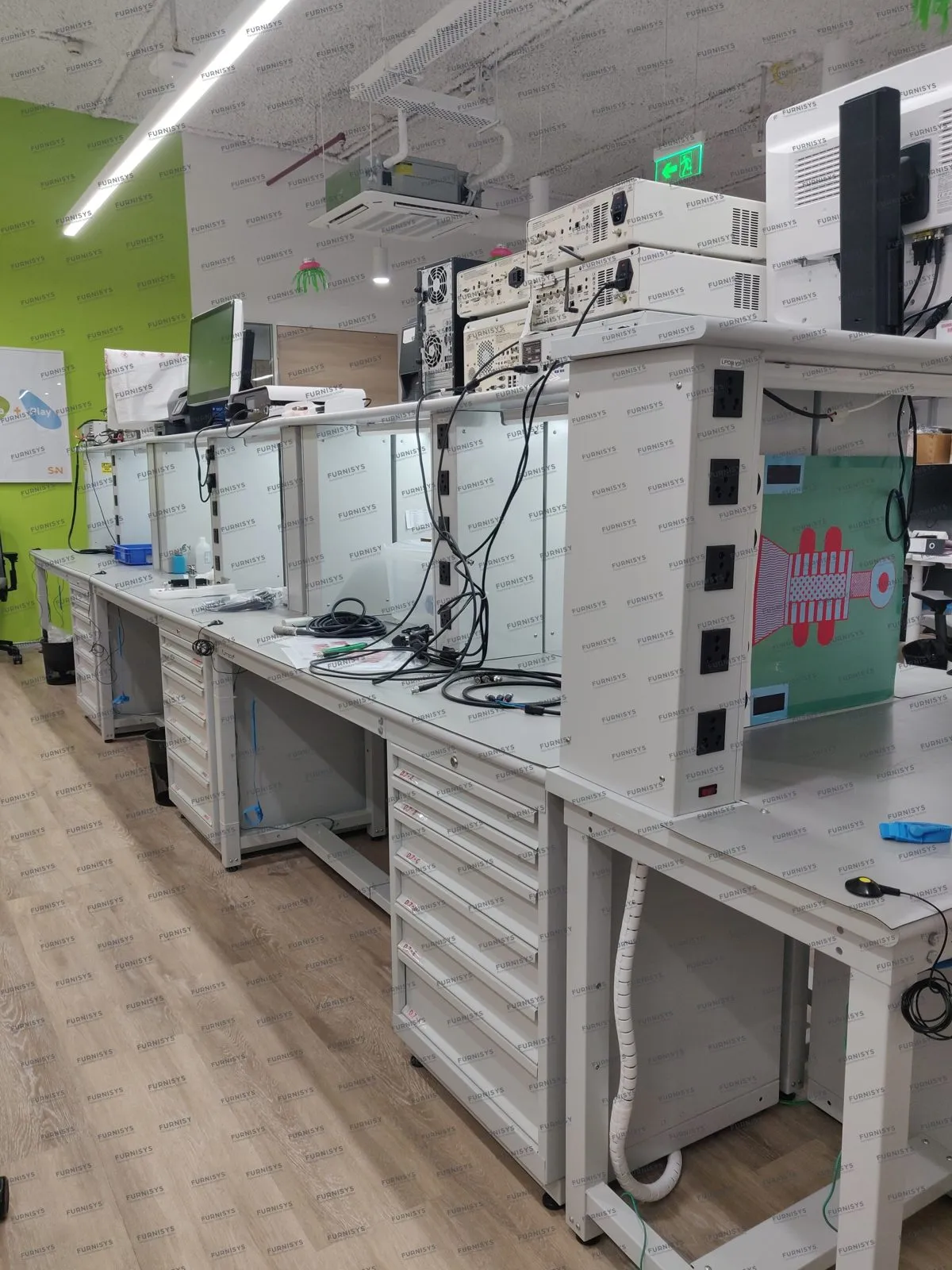
If your line handles static-sensitive electronics, the whole station has to be grounded, not just the worktop. That means a grounded ESD worktop, a wrist-strap ground point, and a common connection to ground.
Specify the station to the ESD control programme your customers audit you against: usually ANSI/ESD S20.20, or IEC 61340-5-1 (edition 3, 2024). Both cover parts that can be damaged at 100 V (human body model). See ESD workstations for how Furnisys specifies the worktop and grounding accessories.
6. Plan what goes above and below the worktop
A bench becomes a workstation when tools, parts and power are placed where the work needs them:
- above: uprighters, shelves, bins, task lights, power and monitor arms
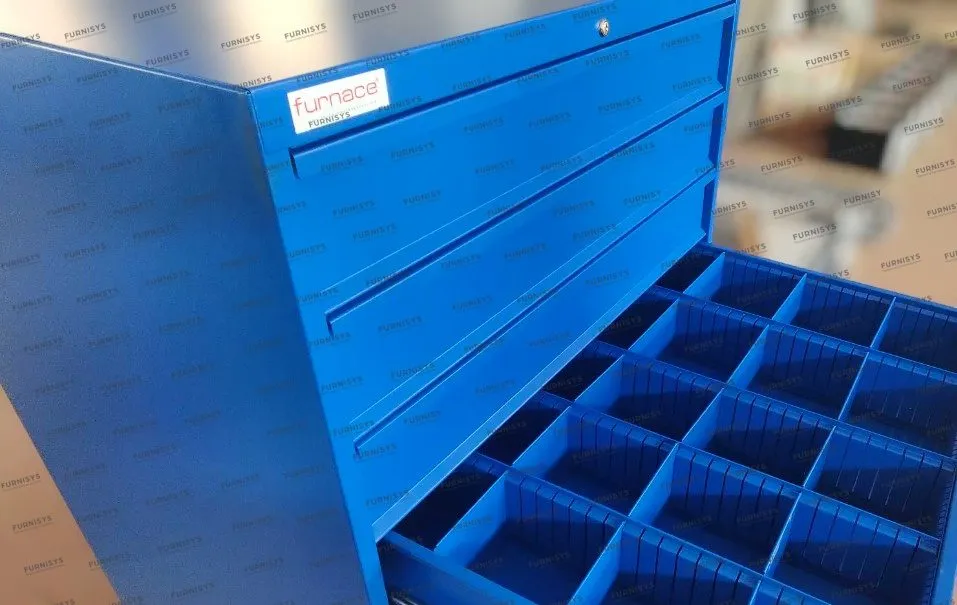
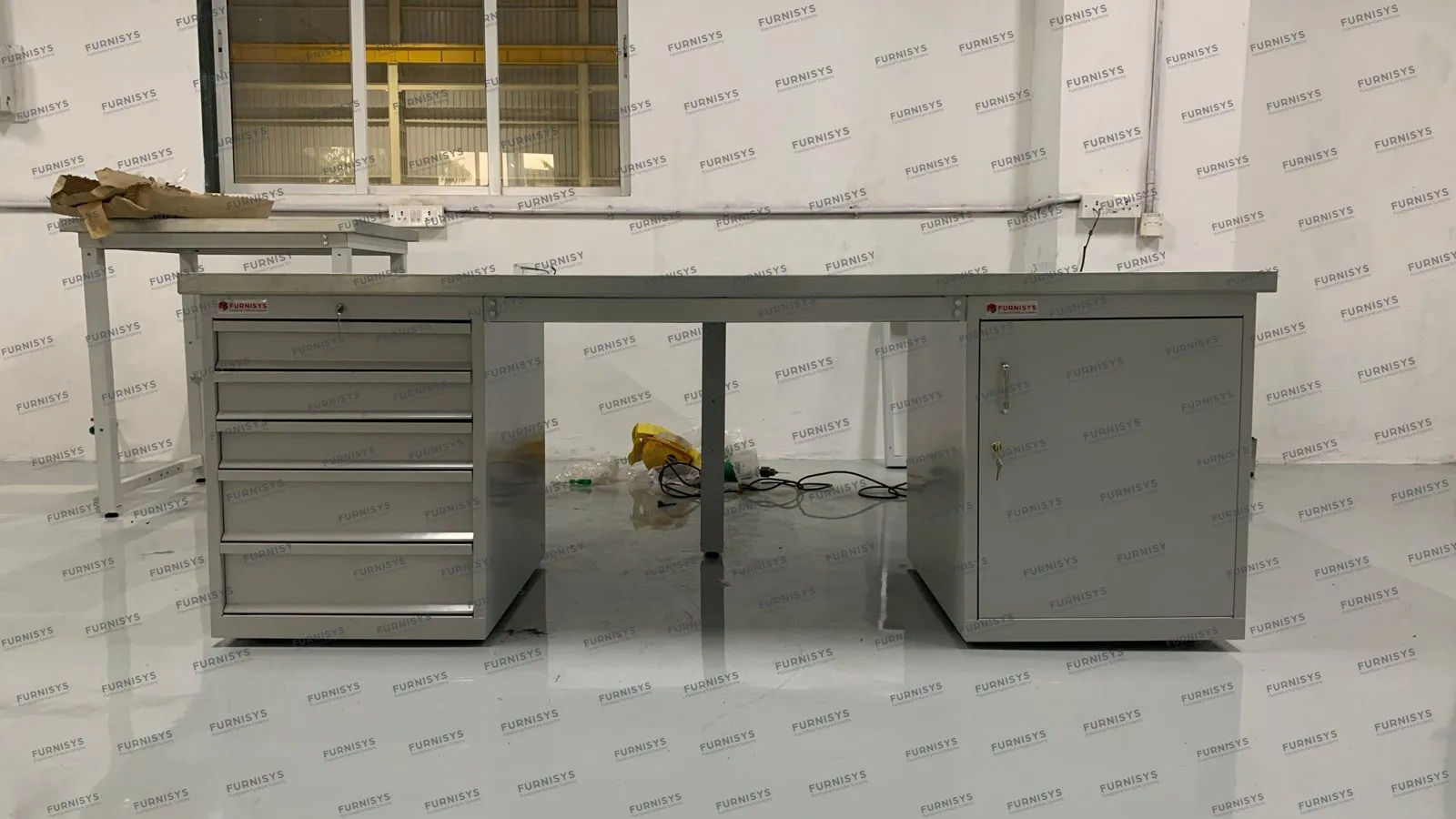
- below: drawer cabinets and mobile cabinets that roll to where the work is
- behind or beside: flow racks that feed parts first in, first out
Uprighters, shelves and overhead cabinets shows what can mount on one frame.
7. Ask what happens when the process changes
Lines change. Ask each supplier:
- Can the bench be reconfigured, or does every change mean cutting and welding?
- Are the parts standard, so you can add a module or order a spare later?
- Can more stations be added to the line without replacing the first ones?
Fabricated furniture or a system? compares the two approaches over the life of a workspace.
The specification, in one table
Copy this into your request for quotation:
| Item | What to write |
|---|---|
| Task | What the operator does, sitting or standing, hours per shift |
| Load | Evenly distributed load in kg, plus any vice or point load |
| Size | Width × depth in mm, and number of stations |
| Worktop | Material, chosen by hazard (table above) |
| Height | Fixed height, or adjustable range in mm |
| ESD | Yes or no; the standard you are audited to |
| Above the worktop | Uprighter, shelves, bins, lights, power |
| Below the worktop | Drawer or mobile cabinets, drawer sizes |
| Changes | Must the bench be reconfigurable and extendable? |
The RFQ checklist covers what else to send suppliers and how to compare the quotes.
Frequently asked questions
What load rating does an industrial workbench need?
Add the heaviest part, fixtures and vices, and anything mounted above or stored below, then choose a bench rated above that as evenly distributed load in kg. Furnisys Base workbenches are rated up to 454 kg and Pro workbenches up to 1,000 kg.
Which worktop is best for assembly work?
High-pressure laminate or postform laminate suits most general assembly, packing and inspection. Use GI cladding for impact, stainless steel for oils, chemicals and washdown, and a grounded ESD worktop for static-sensitive electronics.
Should I buy fixed-height or adjustable workbenches?
Fixed height is fine when one task and one shift use the station. Choose adjustable height when several operators share it, or when the task changes between seated and standing work.