- Industry
- Aerospace (launch vehicles and propulsion)
- Application area
- R&D and engine prototyping
- Furnisys systems
- Scitec Workbench, Scitec Workstation, Link Uprighter
- Engagement
- Product configuration, installation and after-sales service
A startup building reusable launch vehicles
Situation
The client is engineering reusable launch vehicles powered by methane-oxygen full-flow staged combustion engines. In the R&D phase, their prototyping lab assembles and machines engine parts by hand.
Vibration, impact and uneven floors
The challenge
Drilling, cutting, buffing and grinding produce vibration and impact loads. The client asked for two setups: a simple heavy-duty bench for machining and handling parts, and a workstation with pegboard accessories for assembly. Both needed GI-cladded, rubber-matted tops and safe power access.
How do you keep a bench steady under a grinder?
The question
How do you build benches that stay level and rigid during vibration-heavy work on uneven lab floors, while keeping tools and critical parts organised?
Two Scitec configurations
The Furnisys approach
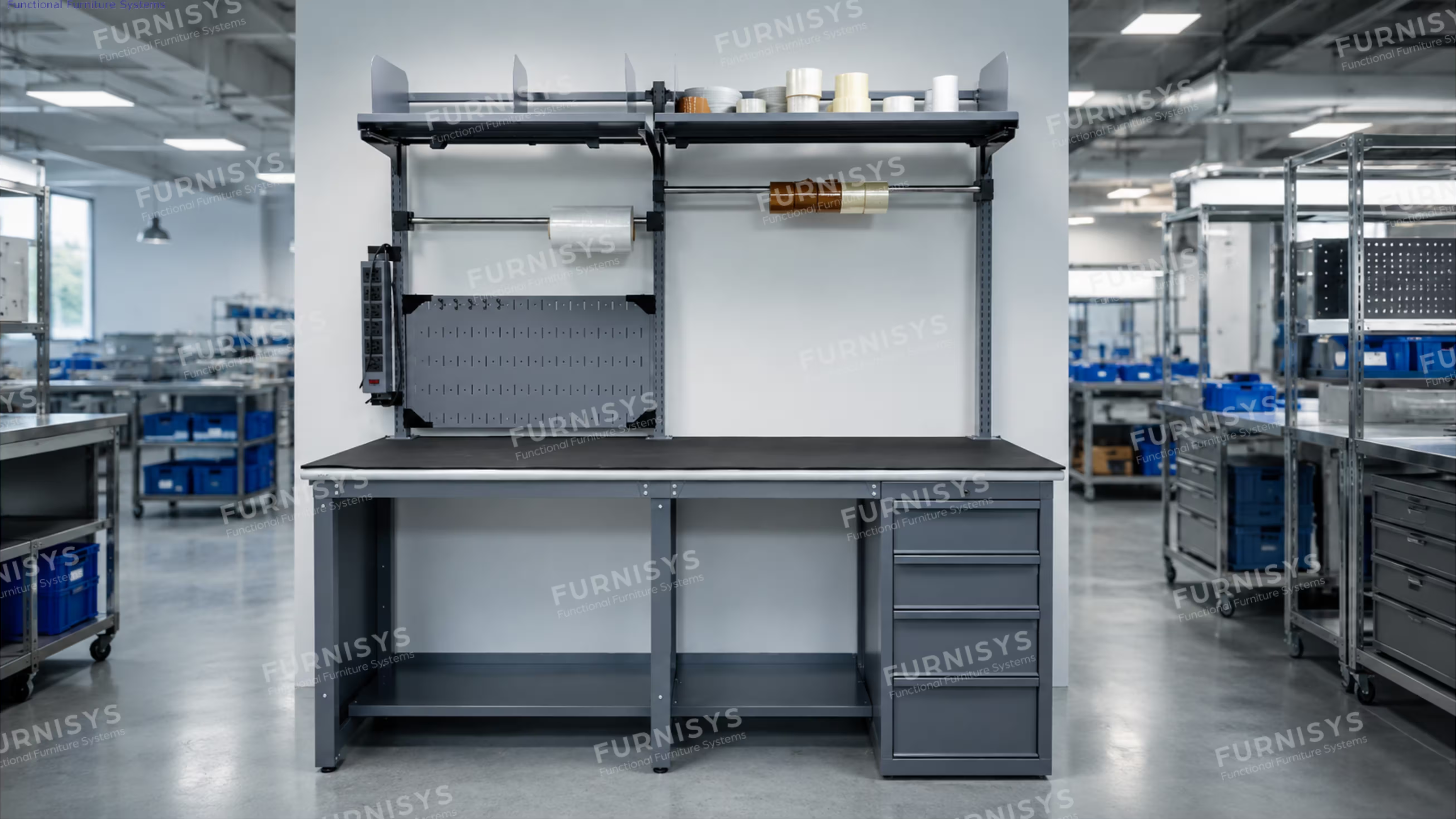
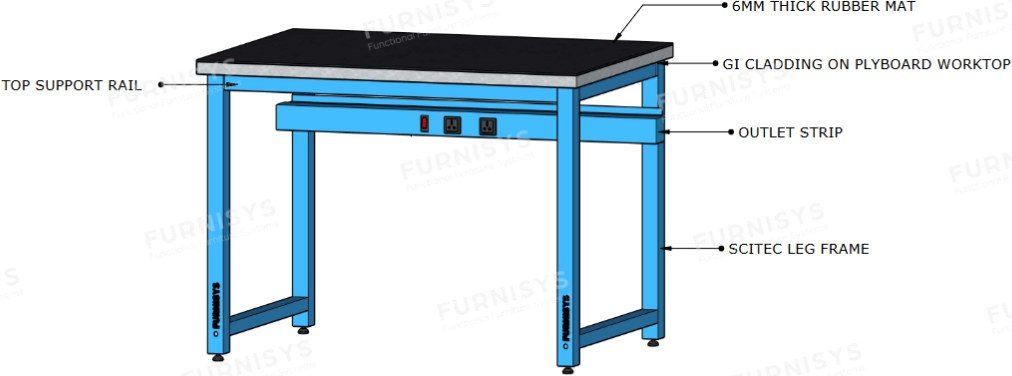
1. Scitec Workbench for machining
- GI-cladded worksurface with an industrial rubber mat for drilling injector plates, cutting brackets and grinding housings
- Threaded stud levellers (M12 × 25, nylon base, zinc-plated steel stud) with 10–15 mm adjustment, without rubber pads, for direct floor contact
- Reinforced top support rail for extra load capacity
- Under-worktop outlet strip with dual sockets for grinders, drills and sanders
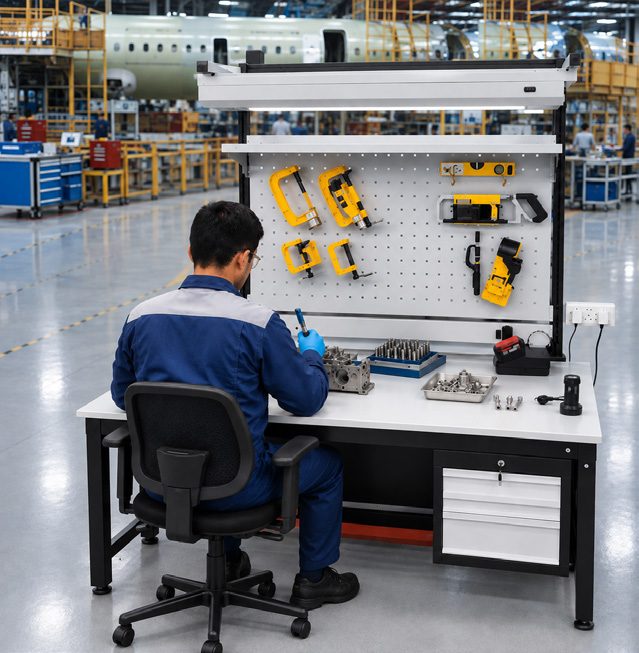
2. Scitec Workstation for assembly
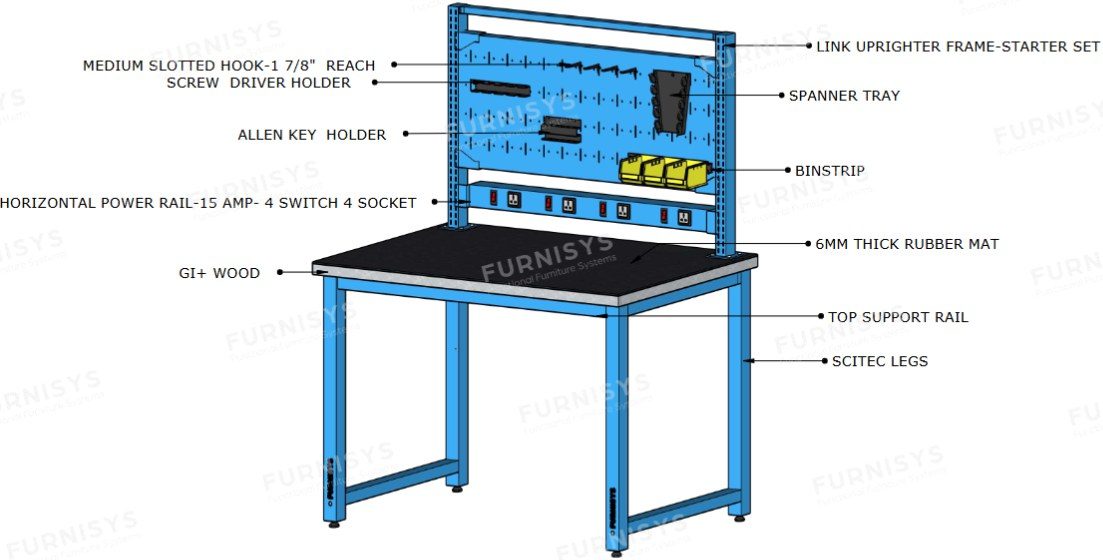
The same top, rail and levellers, plus a Link Uprighter with:
- Pegboard with medium slotted hooks for torque wrenches, mallets and precision pliers
- Screwdriver holder, Allen key holder and spanner tray
- Bin strip for cryogenic O-rings, injector screws, washers, dowel pins, circlips and quick-release clamps
- Horizontal power rail for several tools at once
Machine on one, assemble on the other
How the setup works together
Parts are cut, drilled and ground on the workbench, then move to the workstation for assembly of nozzle assemblies, injector manifolds and turbopump casings, with every tool and small part in view.
What the lab received
What the configuration enabled
- Rigid, level benches for vibration-heavy prototyping
- Impact-absorbing, non-slip tops
- Power at the bench without trailing cables
- Organised storage for small, critical aerospace parts
Details that matter in R&D
Furnisys perspective
Leveller choice and support rails rarely appear in a brief, but they decide whether a bench stays true under a grinder. See more on our aerospace solutions page.
Frequently asked questions
How do you level a workbench on an uneven lab floor?
Threaded stud levellers allow fine adjustment. Here M12 × 25 levellers gave 10–15 mm of adjustment and were fitted without rubber pads for firmer floor contact.
What worktop suits grinding and drilling?
A GI-cladded top with an industrial rubber mat gives a rugged, non-slip, impact-absorbing surface.
Can power be provided under the worktop?
Yes. An outlet strip under the worktop lets technicians plug in power tools without trailing cables.