- Industry
- Textile and apparel (shirts, trousers, corporate wear)
- Application area
- Raw material storage and kitting
- Furnisys systems
- Link Flow Rack, Link Workstation
- Engagement
- Space planning, product configuration, installation and after-sales service
A supply process that ran on searching
Situation
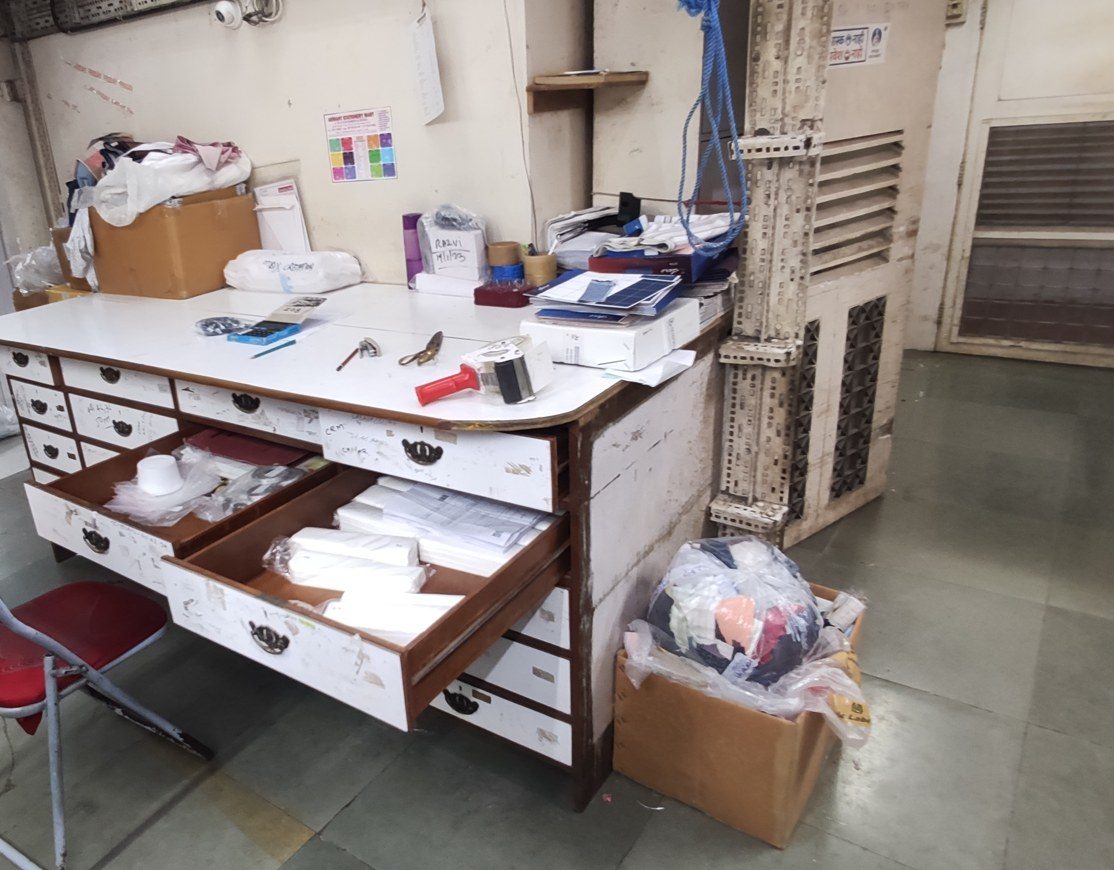
The client manufactures shirts and trousers across formal, casual and occasion ranges. Raw materials for their vendors (fabric, buttons, box pattis, collar bones and brand, wash and size labels) were collected, kitted and issued from one area.
Although the facility was split into casual, formal and kitting/issuing departments, the storage itself was not organised. Finding materials took time and effort.
Moving to a lean workspace
The challenge
After reviewing our website and catalogue, the client asked about FIFO flow racks and compact storage. The aim was a lean layout: organised storage for raw materials and a dedicated place to assemble kits.
How do you make kitting a flow, not a hunt?
The question
How do you lay out raw material storage and kitting so that materials come to the operator in order, and kits leave the area complete?
Plan the space, then configure the systems
The Furnisys approach
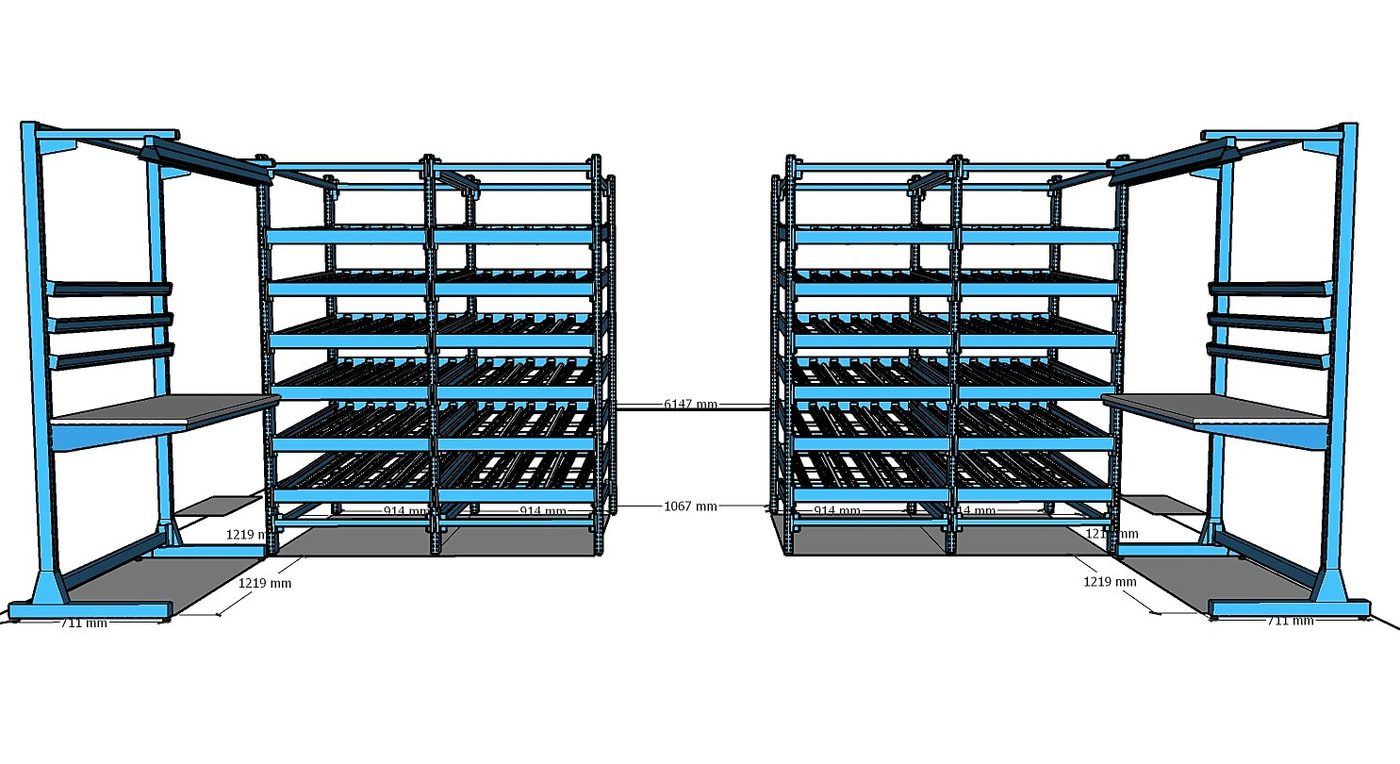
We reviewed the layout, shared 2D layouts and 3D visualisations, and offered several configuration options before the final selection.
1. Link Flow Rack (starter and adder)
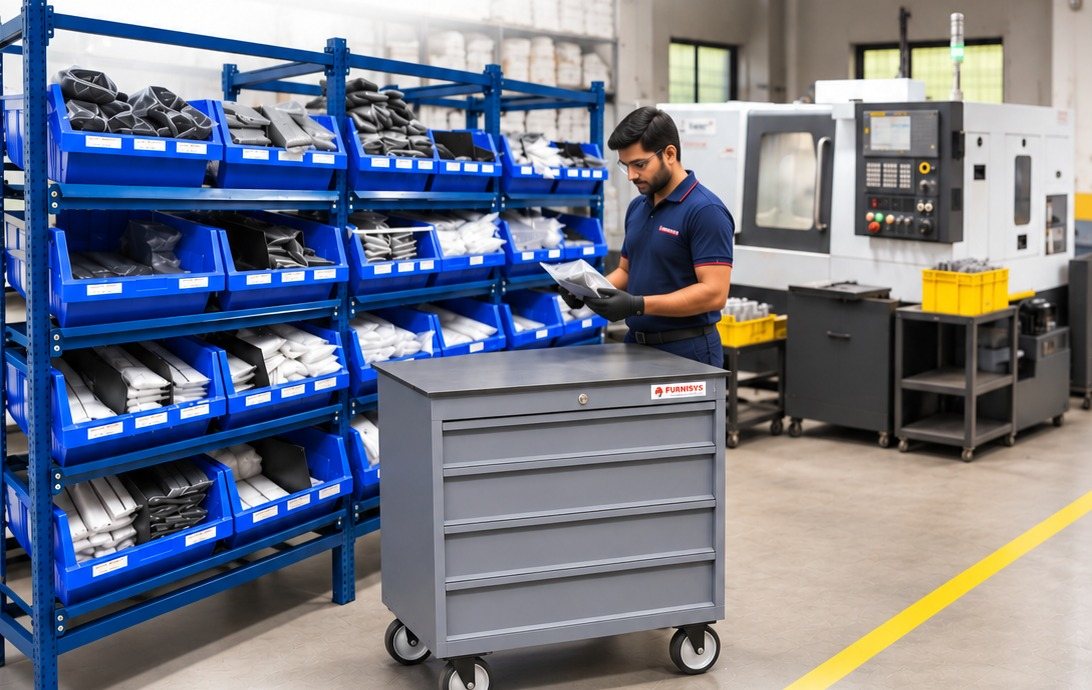
The selected option used one starter frame and two adder frames to create three flow racks. Starter-adder construction shares frames between bays, which lowers cost and makes it easy to add bays later. The racks give FIFO access to fabric, buttons, box pattis, collar bones and labels. The client sourced the bins separately.
2. Link Workstation for kitting
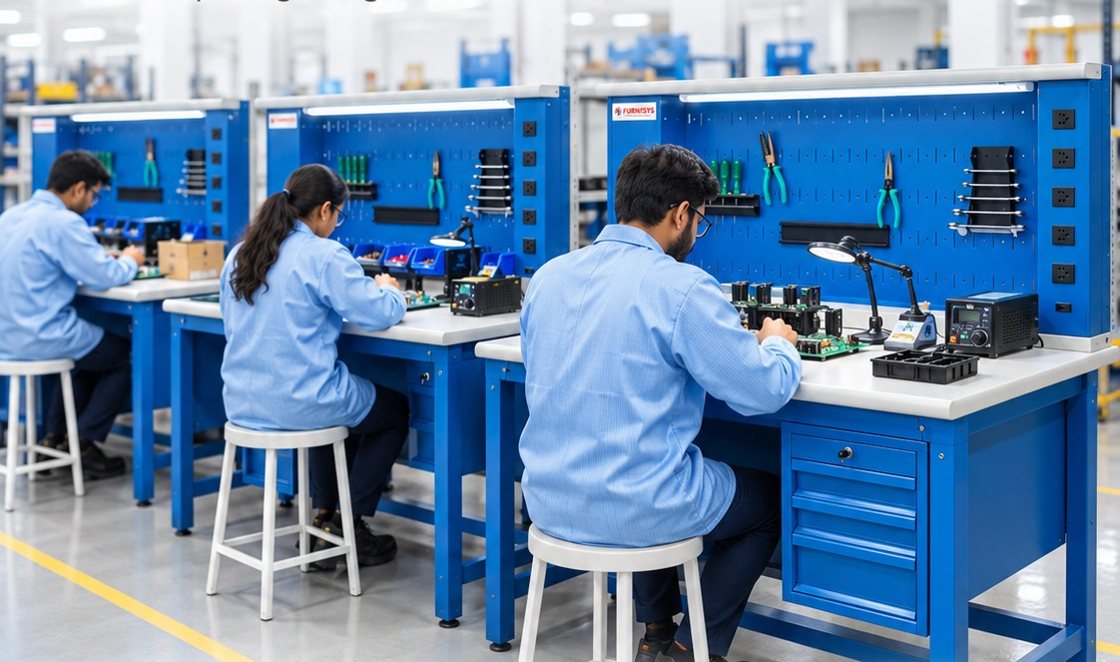
A Link Workstand with a postform laminated worktop, four bin rails and a fixed tube light with reflector. Tape dispensers, scissors, punches, staplers and packing materials sit within reach so kits are put together in one place.
Pick, kit, issue
How the setup works together
Materials are loaded into the flow racks and picked in FIFO order. Operators assemble kits at the workstation next to the racks and issue them to vendors without crossing the floor to search.
What the client received
What the configuration enabled
- FIFO storage for every raw material in the kit
- A dedicated kitting station with lighting and bin rails
- Less time spent searching for materials
- Racks that can be extended with adder frames as volumes grow
Lean starts with where things live
Furnisys perspective
Flow racks are not only storage. Placed beside the kitting station, they set the order in which work happens.
Frequently asked questions
What is a starter and adder flow rack?
The first bay (starter) has two end frames. Each additional bay (adder) shares a frame with the one before it, which lowers cost and makes expansion simple.
What materials suit FIFO flow racks in apparel?
Fabric, buttons, box pattis, collar bones and brand, wash-care and size labels were stored here in bins on the flow racks.
Does Furnisys help with the layout?
Yes. For this project we planned the space and shared 2D layouts and 3D visualisations before the client chose a configuration.